
Many people are new to windows and doors and are confused when they hear the term “system window.” Simply put, a regular window is like assembling individual parts, while a system window is a product designed and manufactured with overall considerations.
The sound insulation and heat insulation of windows and doors largely depend on the glass. Many people believe that thicker glass is better, but this is not the case. The key lies in the glass configuration—the thickness of the insulating layer, whether it is filled with argon gas, and whether it has a Low-E coating—all of these affect the final effect.
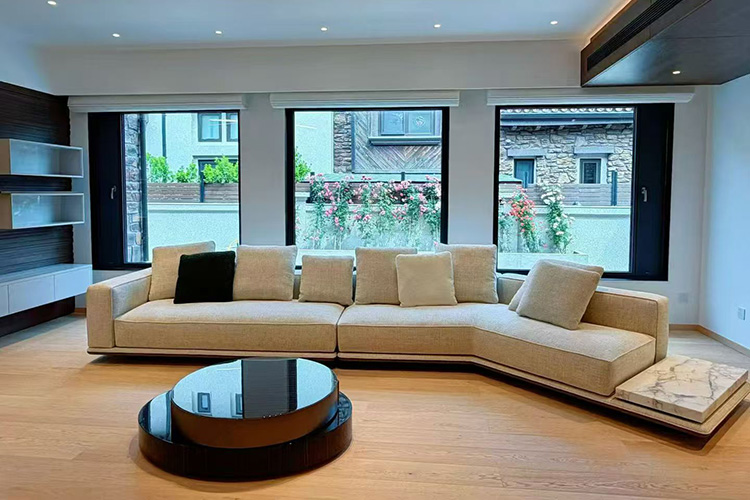
Sealing technology determines the “lifeblood” of windows
Whether windows and doors leak or not, and whether they provide sound insulation, depends entirely on the sealing technology. Many older houses leak during the rainy season, and the problem lies in the sealing.
Currently, the mainstream sealing method is a multi-layered sealing design, combined with high-quality EPDM rubber strips, which effectively improves airtightness and watertightness. For rainy, humid areas like Hangzhou, which are also affected by typhoons, waterproof stability under heavy rain is a key indicator that needs to be examined. In addition, seamless welding of the entire frame is also noteworthy, as it helps improve visual uniformity and long-term stability, preventing corner cracking or water leakage.
Frame Materials and Insulation: Don’t Overlook These Details
The frame of a door or window is its skeleton, and the thickness of the frame material directly affects its wind pressure resistance. In high-rise residential buildings or windy coastal areas, it is recommended to focus on the wall thickness of the frame material. 2.0mm thicker frame materials help improve frame stability and prevent swaying in strong winds.
Regarding insulation, multi-chamber thermal break strips are the current trend. Compared to older PVC thermal break strips, the multi-chamber structure helps improve insulation and sealing performance, especially suitable for areas with hot summers and cold, damp winters. Good thermal break strips not only reduce heat transfer but also reduce condensation problems caused by indoor and outdoor temperature differences.
Suitable for Families, Choose According to Needs
There is no “one-size-fits-all” door and window; the key is to consider your actual needs.
- High-rise residential families: It is recommended to prioritize wind pressure resistance and airtightness. Frame wall thickness and drainage system design are key points.
- For homes facing the street or in older neighborhoods: Sound insulation is paramount. Pay special attention to glass selection and sealing techniques.
- For west-facing rooms or balconies with views: A balance between heat insulation and views is key. Consider Low-E glass with a large panel design.
- For families in the Jiangnan region: Water tightness and moisture/mildew resistance are essential for long-term use. Leak-proof performance even in heavy rain is a crucial factor.
Summary
Customizing doors and windows for the entire house is not simply a matter of choosing a style and taking measurements. From the profiles, glass, and sealing techniques to the installation details, every step affects the future living experience.