
The core material of stainless steel kitchen cabinets is stainless steel sheet. The mainstream material used in the market is 304 stainless steel (chemical composition: 18% chromium + 8% nickel), while some products use 201 stainless steel (17% chromium + 4-6% nickel). The biggest difference between the two lies in corrosion resistance: 304 stainless steel can withstand salt spray tests for over 720 hours, while 201 stainless steel begins to show signs of rust within about 200 hours. For environments like kitchens with high humidity and frequent contact with acidic and alkaline substances, 304 is a more stable choice.
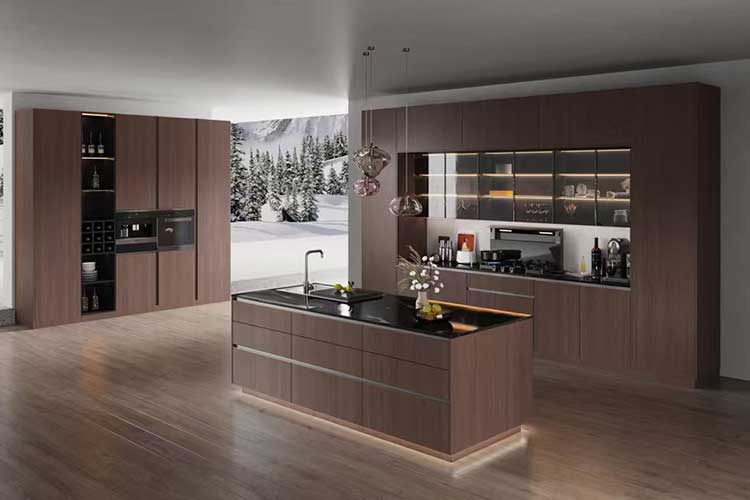
Sheet thickness varies from 0.8mm to 1.5mm, with 0.8mm and 1.0mm being common specifications. High-end products generally use 1.2mm or thicker. Thickness directly affects the cabinet’s load-bearing capacity and lifespan—a 1.0mm sheet can support approximately 40-60kg per layer, while a 1.2mm sheet can support 70-90kg. The difference is noticeable when storing a large number of cookware and appliances.
Structural Components of a Stainless Steel Kitchen Cabinet
A complete stainless steel kitchen cabinet consists of the following parts:
Cabinet Body: Constructed from bent stainless steel sheets, typically filled with honeycomb aluminum core or rock wool for insulation and noise reduction. The honeycomb aluminum core structure helps distribute stress and reduce deformation upon impact.
Door Panels: Common surface treatments for stainless steel door panels include brushed (matte texture), sandblasted (delicate matte finish), mirror polished (high gloss), and PVD electroplating (available in colors like champagne gold and rose gold). Different surface treatments significantly affect fingerprint visibility: brushed surfaces are the most aesthetically pleasing, while mirror finishes are the most difficult to maintain.
Countertop: Stainless steel countertops are typically 1.0-1.2mm thick, with a welded support structure underneath. Compared to quartz countertops, stainless steel countertops are seamlessly molded, eliminating seams and preventing dirt accumulation. However, they have a cooler visual feel, making them suitable for users prioritizing durability.
Edge Sealing: This is a crucial detail affecting the quality of stainless steel kitchen cabinets. High-end products are manufactured using laser welding in a single piece, resulting in seamless edges and corners that are both aesthetically pleasing and completely prevent moisture intrusion. Lower-end products use PVC edging or silicone filler, which is prone to cracking and mold growth over time.
What Scenarios Are Suitable for with Stainless Steel Kitchen Cabinets?
Most Suitable Scenarios:
- Damp and wet kitchens: Open kitchens and lower cabinets near the sink area use a lot of water daily. While panel cabinets easily absorb water and swell, stainless steel is completely unaffected.
- Users seeking long-term use: Stainless steel releases no formaldehyde, has zero VOCs, and is 100% recyclable. Its lifespan can reach over 20 years, far exceeding the 8-12 year lifespan of panel cabinets.
- High-end or commercial kitchens: Five-star hotels and Michelin-starred restaurants all use stainless steel kitchenware systems. International chefs like Gordon Ramsay use stainless steel in their professional kitchens for this reason.
- Families with infants or members with allergies: Traditional panel cabinets release formaldehyde for 3-15 years, a concern addressed by stainless steel.
Less Suitable Scenarios:
- Limited budget (Stainless steel kitchen cabinets typically cost 2000-8000 RMB per linear meter, higher than the 1000-3000 RMB range for ordinary panel cabinets).
- A strong preference for traditional Chinese kitchen styles (stainless steel is more suitable for modern minimalist, industrial, and simple styles).